Préparation :
- Préchauffez le four et préparez un moule à cake bien graissé. Faites tremper les raisins secs dans un peu d’eau tiède si vous voulez les attendrir. Égouttez-les ensuite soigneusement pour éviter d’humidifier la pâte.
- Versez le yaourt dans un grand saladier. Ajoutez les œufs, le sucre, le sucre vanillé et la pincée de sel. Fouettez juste assez pour obtenir un mélange lisse et homogène.
- Incorporez la farine et la levure chimique en une seule fois. Mélangez sans trop travailler la pâte pour garder un cake moelleux. La texture doit rester souple, épaisse mais facile à verser.
- Ajoutez l’huile neutre, puis mélangez à nouveau jusqu’à ce que la pâte soit bien liée. Incorporez enfin les raisins secs égouttés. Répartissez-les uniformément pour qu’ils ne tombent pas tous au fond.
- Versez la pâte dans le moule préparé. Lissez rapidement la surface avec une spatule. Si quelques raisins apparaissent sur le dessus, c’est normal et cela donne un joli résultat après cuisson.
- Faites cuire jusqu’à obtenir un dessus bien doré et un cake gonflé. Vérifiez la cuisson avec la pointe d’un couteau, qui doit ressortir presque sèche. Laissez tiédir avant de démouler.
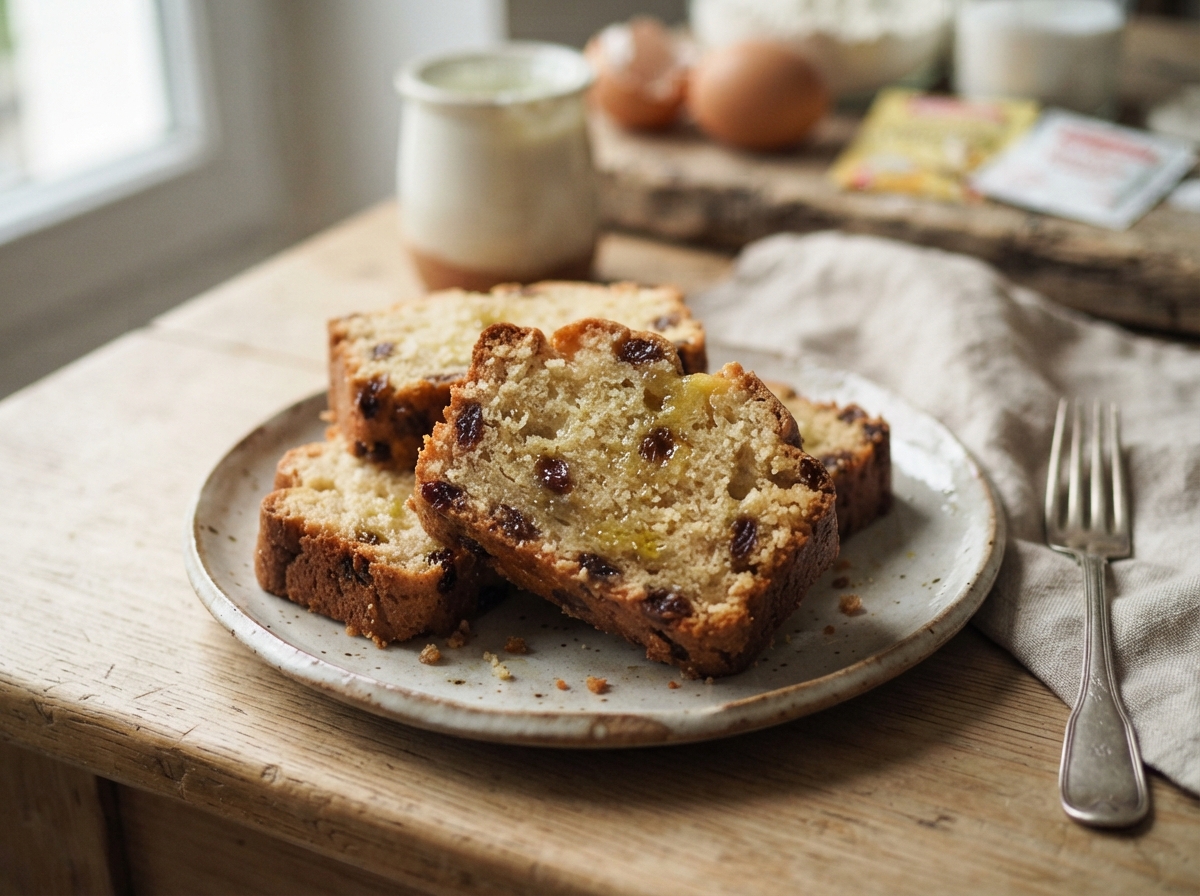
- Attendez quelques minutes avant de couper le cake. Cette attente permet à la mie de se raffermir légèrement. Servez ensuite en tranches, nature ou avec un peu de beurre.
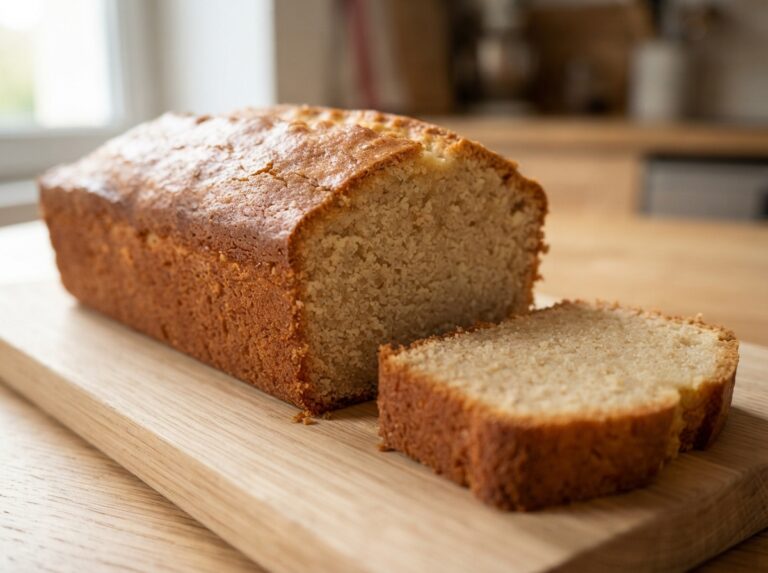
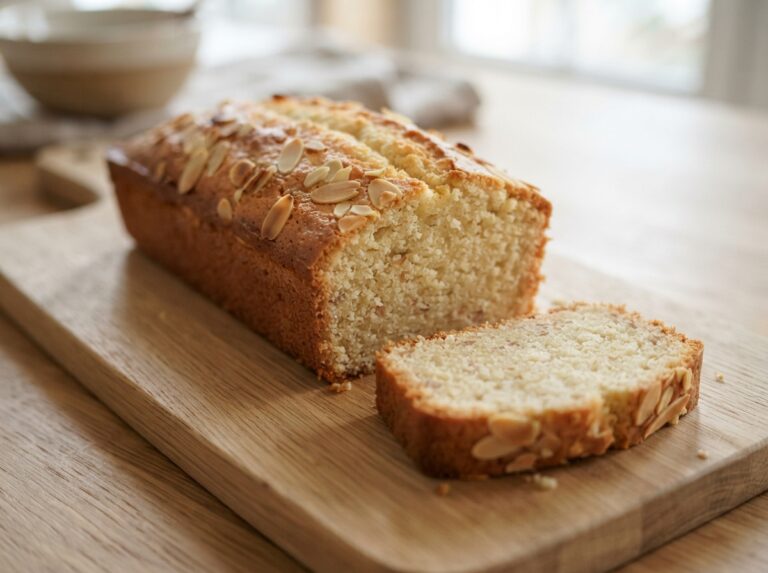
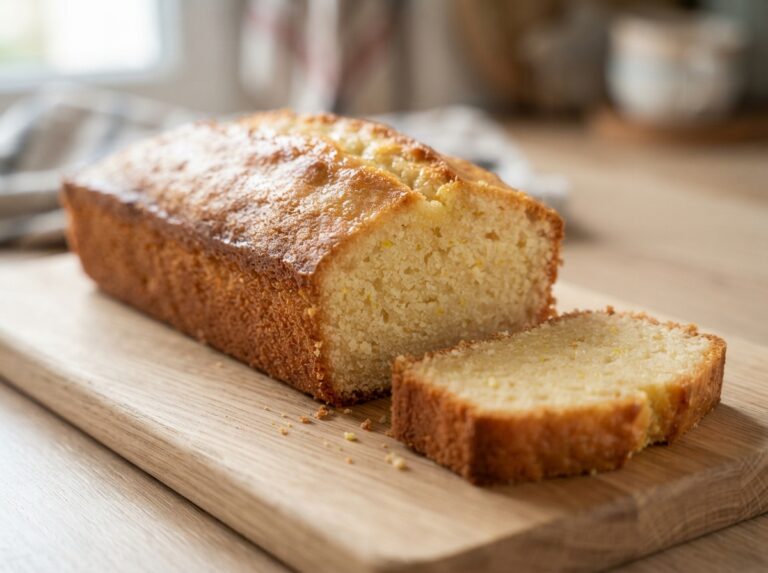
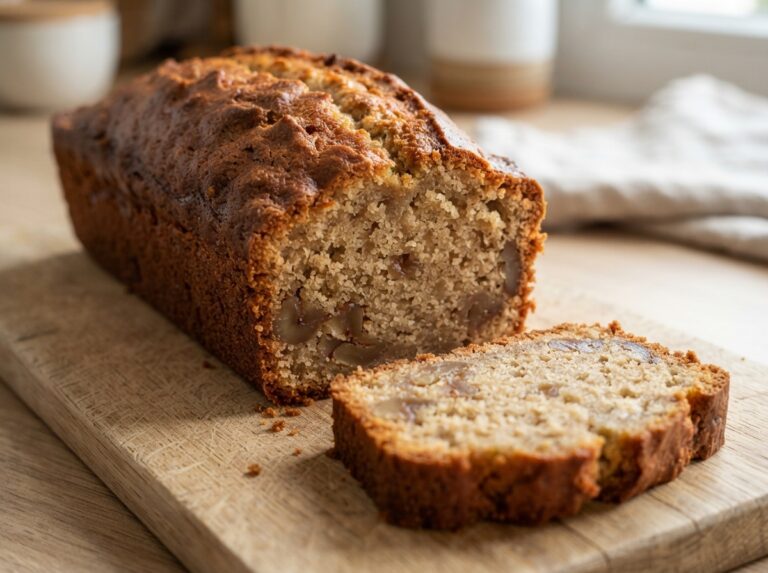
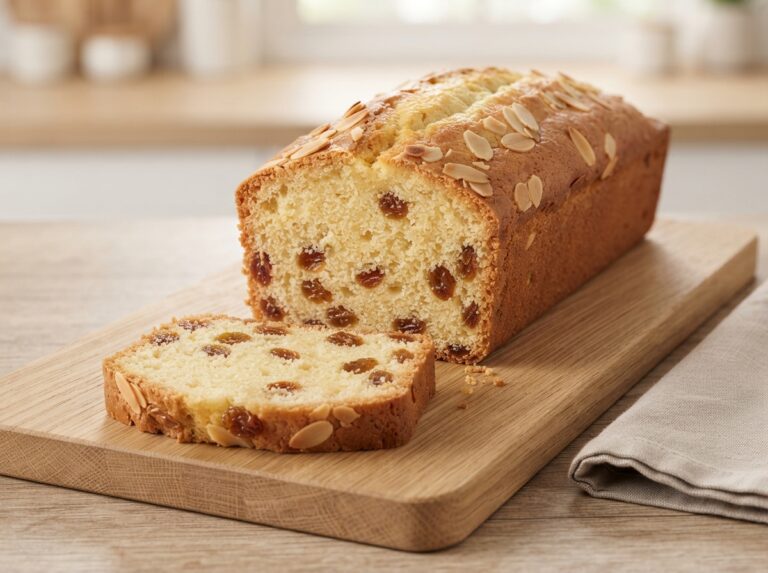
- En cuisine, un cake rapide au yaourt et aux raisins secs coche toutes les cases du goûter réussi. Il est simple, rassurant et toujours très agréable à partager. Ce cake rapide au yaourt et aux raisins secs apporte une douceur immédiate, sans technique compliquée. Il donne tout de suite envie d’une tranche encore tiède.Ce que j’apprécie dans cette recette, c’est sa simplicité très concrète. La pâte se prépare vite, avec des ingrédients du placard. En moins d’une heure, vous obtenez un gâteau moelleux et parfumé. La mie reste souple, et les raisins secs apportent une touche gourmande à chaque bouchée.Le contraste entre la mie tendre et les raisins secs légèrement sucrés fonctionne très bien. Le yaourt apporte un fond doux et léger. Le tout reste équilibré, sans lourdeur. C’est le genre de gâteau qui accompagne aussi bien un café qu’un chocolat chaud.Vous pouvez personnaliser ce cake selon vos envies du moment. Ajoutez un peu de zeste de citron, une pointe de cannelle ou quelques graines de sésame. Pour une version plus rustique, remplacez une partie des raisins secs par des cranberries. Cette base s’adapte bien à une cuisine simple et rapide.Ce cake plaît autant aux enfants qu’aux adultes. Il convient pour un petit-déjeuner, un goûter ou un dessert improvisé. Servez-le avec un yaourt nature, une salade de fruits ou un thé léger. Pour un service plus gourmand, une compote de pommes fonctionne aussi très bien.
- image_prompt
- A single finished **cake rapide au yaourt et aux raisins secs**, fully baked, sliced, and ready to serve.Final dish presentation:
– photographed from a 30-to-35-degree camera angle above the dish (sweet spot 35°), camera positioned slightly above the rim of the vessel and looking slightly downward. The FOOD SURFACE (garnish, sauce, pieces inside) faces the viewer as the main subject and occupies at least 55-65% of the vessel’s visible height. The top rim forms a moderately flattened ellipse with a height-to-width ratio between 1/2.5 and 1/3.5 — NEITHER a very thin ellipse (which would be a near-side 15-25° view, forbidden) NOR a near-round circle (which would be a near-top-down 50-plus-degree view, forbidden). The outer side wall of the vessel is visible but takes no more than 30-40% of the vessel’s visible height — a frame around the food surface, not the main subject. Food content shows real depth with front pieces partially hiding back pieces. A soft blurred kitchen background is visible behind the dish.
– the whole rectangular cake / loaf is placed on a light oak wooden serving board, oriented lengthwise. EXACTLY ONE (1) vertical rectangular slice (about 2 cm thick, keeping the full height and full width of the cake) has been cut from ONE END of the loaf and is placed in the foreground on the same board, cut-face toward the camera. The whole cake behind is now visibly SHORTER by exactly one slice width on that end — the new end of the cake is a clean flat vertical rectangular wall that exposes the full cross-section of the crumb (same crumb pattern and raisins visible as on the extracted slice’s cut face). NEVER carve a wedge, triangle, notch, hole, or U-shape out of the middle or front of a rectangular cake — slices are always cut from an END, so the cake is simply shorter after the slice is removed. NEVER render the whole cake perfectly intact with a slice next to it. The width, depth and height of the extracted slice MIRRORS exactly the missing end of the cake.
– framed as an extreme close-up macro product shot : the dish and its vessel fill nearly the entire frame (at most 3-8% margin on each side), touching the frame edges — no cutlery of any kind visible, no folded napkin beside the vessel, no props of any kind in the frame, no elaborate kitchen ambiance behind — just the dish, its vessel, and the bare surface it rests on cropped by the frame edges. Tight, high-impact, Pinterest-thumbnail composition designed to stop the scroll.
– the loaf is pale golden-brown on the outside, with a soft ivory crumb inside. The raisins are dark amber to deep brown and visibly embedded throughout the slice.
– the surface shows a gently domed top with a few natural cracks, typical of a homemade French-style cake.
– the board is clean, light oak, and visible only as a narrow frame around the cake.
– no icing, no glaze, no extra decoration, no powdered sugar, no fruit garnish.
– the cake is the only food subject in the frame.Cake texture:
– golden-brown crust, slightly matte and lightly cracked
– moist, tender crumb with a soft, airy structure
– raisins plump, dark, and evenly distributedYaourt texture:
– creamy pale batter base baked into a soft, fine crumb
– smooth and moist interior
– subtle sheen only on the cut faceEgg texture:
– fully baked into the crumb, not visible as separate pieces
– contributes structure and a tender, airy interior
– no raw egg appearance anywhereSugar texture:
– fine sweetness baked into the crumb
– caramelized lightly on the crust
– no visible granules, only a soft golden finishFlour texture:
– fine, uniform crumb structure
– slightly dense yet tender cake interior
– pale beige crumb with tiny air pocketsNeutral oil texture:
– contributes a moist, supple crumb
– no oily surface visible
– soft, almost satin-like mouthfeel implied by the crumbLeavening texture:
– airy rise throughout the loaf
– fine, regular bubbles in the crumb
– light and evenly lifted structureRaisins secs texture:
– dark brown to amber, plump and glossy
– slightly wrinkled skin, soft and embedded in the crumb
– scattered throughout the slice and visible in the cut faceSugar vanillé texture:
– subtle warm vanilla tone in the crumb
– no visible specks needed, only a gentle aromatic suggestion
– integrated into the batter and baked evenlySalt texture:
– invisible in the final cake
– used only to balance flavor
– not visible in the imageColor palette:
– golden-brown crust
– pale ivory crumb
– deep amber raisins
– light oak wood surface
– soft warm beige background blurVisual realism:
– authentic homemade French cake appearance, natural crumb irregularities, realistic raisin distribution, no duplicated patterns, no artificial symmetryFood photography:
– ultra-realistic professional food photography, soft diffuse natural window/side-lighting highlighting the crumb and golden crust with gentle shadows for volume, shallow depth of field, strong background blur, 85mm macro lens feel, highly detailed textures, 8K photorealistic quality, razor-sharp focus on the cake, culinary magazine styleNo timing text, no descriptions overlay, no extra notes, no clutter, minimal shadows, no numbers, no digits, no numbered badges or circles, no watermark, no logo, no captions of any kind anywhere in the image.
- collage_prompt
- A vertical Pinterest-style food photography collage for **Cake rapide au yaourt et aux raisins secs**, portrait orientation, 2:3 aspect ratio, EXACTLY 6 square photo panels arranged in a 2-column by 3-row grid (2×3, total 6, no more no less), same bowl/pan/plate and consistent lighting across all panels. This is a plain photographic grid, not an infographic, not a tutorial graphic, not a diagram — just six ordinary food photographs placed side by side. ABSOLUTELY NO TEXT ANYWHERE: no panel numbers, no digits, no badges, no circles, no ingredient name captions or labels under any bowl or item, no watermark, no words in any language. Pure photography only, zero typography of any kind.Style:
– ultra-realistic food photography, bright natural lighting, clean modern kitchen aesthetic, soft shadows and realistic textures, elegant Pinterest-style composition, premium food magazine look, soft pastel or white background, FIXED 35-DEGREE CAMERA ANGLE above the food for EVERY one of the 6 panels (identical camera elevation across all 6 panels AND matching the same 35° angle used in ‘image_prompt’ above — never top-down, never flat lay, never a three-quarter overhead view, never a low 10-15° near-eye-level view, exactly 35 degrees above the food for consistent framing), highly appetizing and realisticPanneau en haut à gauche — ingrédients : a plain wooden board and small neutral bowls showing the real ingredients of the recipe: a small bowl of plain yogurt, a few whole eggs in a bowl, a bowl of sugar, a bowl of flour, a small bottle or jug of neutral oil, a sachet or small bowl of baking powder, a small bowl of raisins, a small bowl of vanilla sugar, and a tiny pinch of salt in a small ramekin. No labels, no writing, no captions, only the ingredients visible in their natural colors and textures.
Panneau en haut à droite — a mixing bowl with yogurt, eggs, sugar, vanilla sugar, and salt being whisked into a smooth pale batter, visibly becoming glossy and homogeneous, with a clean kitchen prep feel and no hands dominating the frame.
Panneau du milieu à gauche — flour and baking powder being added to the batter in the bowl, the mixture thicker now, with a spatula or whisk creating visible folds and streaks as it starts to unify.
Panneau du milieu à droite — raisins being folded into the finished batter, the mixture thick and smooth, the raisins visibly distributed throughout, the batter ready to pour into the loaf tin; show a true baking step with the batter in a baking tin, not a plain prep board.
Panneau en bas à gauche — the cake finished EN ENTIER, baked and unmolded, resting on a light oak wooden serving board with a single clean sliced end visible; the loaf looks golden-brown, domed, and homemade, with one slice already removed from one end to reveal the crumb and raisins inside. The board is the serving surface, not a baking tin, and the whole cake remains centered and clearly readable.
Panneau en bas à droite (DERNIER panneau, aucun panneau après celui-ci, LE PLUS IMPORTANT DE TOUS — c’est ce panneau qui doit donner envie à quelqu’un qui scrolle sur Pinterest/Facebook d’arrêter de scroller et de cliquer pour lire l’article complet) — GROS PLAN EXTRÊME and macro close-up on the sliced cake piece resting stably on the same light oak wooden serving board. The slice fills almost the entire frame, with the moist crumb, golden crust, and dark raisins sharply visible, while the background falls into a creamy blur. The slice is centered exactly in the frame and sits flat and logically on the board, with no floating, no impossible balance, and no hand or utensil in sight.DIFFÉRENCIATION VISUELLE OBLIGATOIRE ENTRE LES 6 PANNEAUX : each panel must show a clearly different stage — ingredients, wet mixture, thickened batter, raisin folding, whole baked loaf, extreme close-up slice. Avoid two panels that look like the same prep moment.
Applique pour chaque panneau les mêmes règles que pour ‘image_prompt’ : STRICT INGREDIENT CONSISTENCY, no invented toppings, no extra ingredients, realistic homemade texture, and the same board/surface language in the final and close-up panels. Food details: the batter must look smooth and creamy, raisins plump and dark, the baked cake golden and moist; proportions realistic. Quality: ultra-detailed, professional culinary photography, cohesive lighting, Pinterest-viral composition, 4K realistic rendering.
STRICT REQUIREMENTS: portrait orientation, 2:3 aspect ratio, exactly 6 panels total, arranged in a 2×3 grid, absolutely no more and no less. ABSOLUTELY NO TEXT ANYWHERE IN THE IMAGE, of any kind: no panel numbers, no digits, no step counters, no numbered badges or circles, no ingredient names written as captions or labels under bowls/items, no watermark, no logo, no captions, no words in any language, no typography of any kind. This is a pure photograph — if you find yourself about to render any letter, word, or number anywhere in the frame, do not. Pure photography only, zero graphic overlays, zero text.
Conseils :
- Faites tremper les raisins dix minutes dans l’eau tiède pour les garder moelleux après cuisson.
- Égouttez très soigneusement les raisins avant de les ajouter, sinon la pâte deviendra plus humide.
- Mélangez la farine juste assez pour homogénéiser la pâte et garder un cake bien tendre.
- Beurrez et farinez le moule pour un démoulage net, surtout si votre moule accroche un peu.
- Attendez dix minutes avant de trancher le cake, afin que la mie se raffermisse légèrement.
- Ajoutez un zeste de citron ou une pincée de cannelle pour varier le parfum sans compliquer la recette.
FAQs :
Peut-on préparer ce cake rapide au yaourt et aux raisins secs la veille ?
Oui, et il reste très agréable le lendemain. Laissez-le refroidir complètement, puis emballez-le dans un film alimentaire ou une boîte hermétique.
Peut-on remplacer le yaourt nature dans ce gâteau au yaourt ?
Oui, avec un fromage blanc ou un yaourt végétal nature. Gardez la même quantité pour conserver une pâte souple et équilibrée.
Comment rendre ce cake moelleux encore plus fondant ?
Ne prolongez pas trop le mélange après ajout de la farine. Vous pouvez aussi ajouter quelques raisins réhydratés pour une mie plus tendre.
Peut-on faire une version sans gluten de ce cake yaourt raisins secs ?
Oui, avec un mélange de farines sans gluten prévu pour la pâtisserie. Ajoutez éventuellement une pointe de fécule pour garder une mie légère.
Comment conserver ce dessert familial pour garder son moelleux ?
Conservez-le deux à trois jours à température ambiante, sous cloche ou en boîte hermétique. Évitez le réfrigérateur, qui peut assécher la mie.
Peut-on servir ce goûter facile chaud ou froid ?
Les deux fonctionnent très bien. Tiède, il est plus parfumé ; froid, il se tient mieux pour le petit-déjeuner ou le goûter.