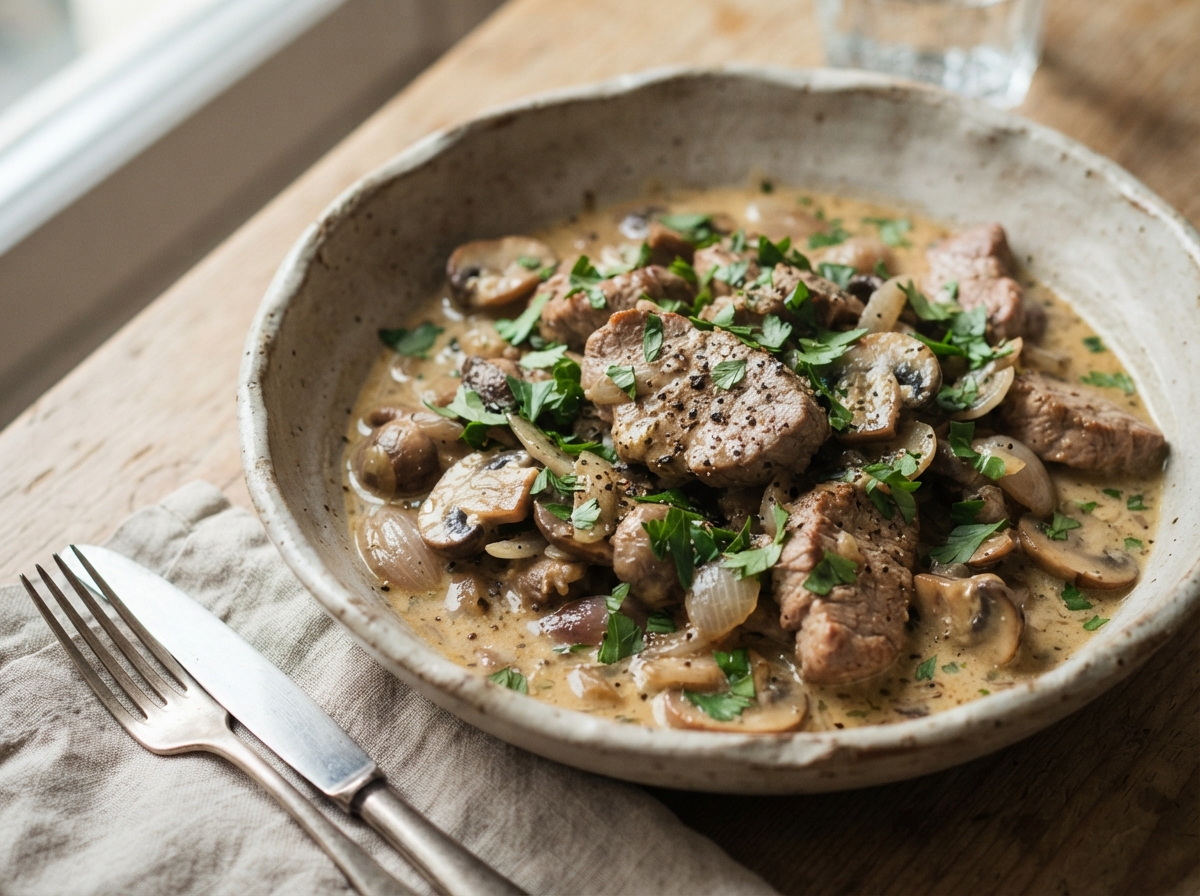
Préparation :
- Taillez le filet de porc en fines lanières régulières. Nettoyez les champignons, puis émincez-les en tranches épaisses. Pelez et hachez finement les échalotes, puis écrasez l'ail.
- Faites chauffer l'huile d'olive et le beurre dans une grande sauteuse. Saisissez le porc par petites portions pour bien le colorer. Réservez-le dès qu'il est juste doré, sans le cuire complètement.
- Dans la même sauteuse, faites revenir les échalotes avec les champignons. Laissez l'eau des champignons s'évaporer, puis ajoutez l'ail. Les champignons doivent devenir fondants et légèrement brunis.
- Versez le cidre brut dans la sauteuse. Grattez bien le fond pour récupérer les sucs. Laissez réduire jusqu'à obtenir une base plus concentrée et légèrement sirupeuse.
- Ajoutez la crème fraîche et la moutarde à l'ancienne. Mélangez pour obtenir une sauce lisse et nappante. Remettez le porc dans la sauteuse avec son jus.
- Laissez mijoter doucement jusqu'à ce que la viande soit tendre et bien enrobée. Rectifiez l'assaisonnement avec le sel et le poivre. Servez aussitôt avec le persil plat ciselé.
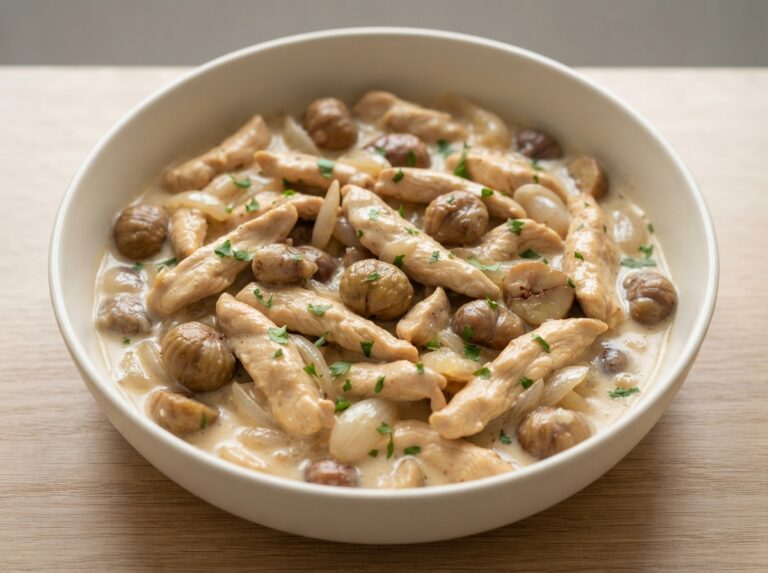
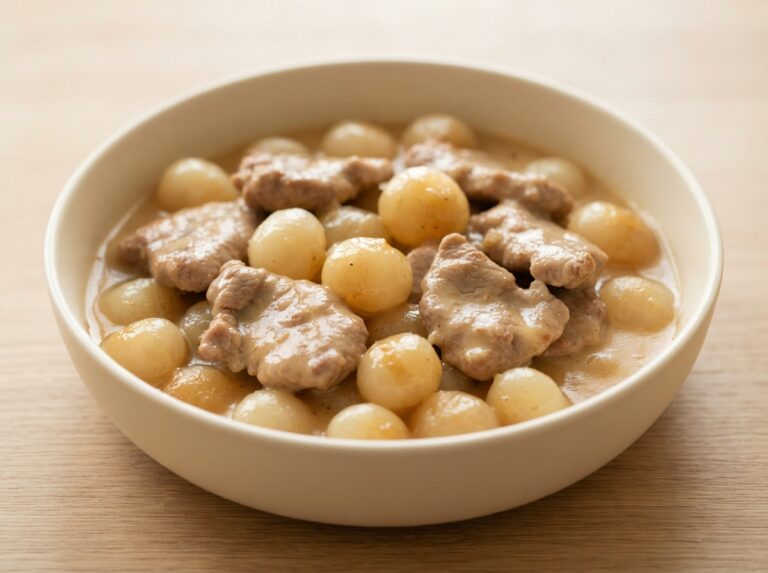
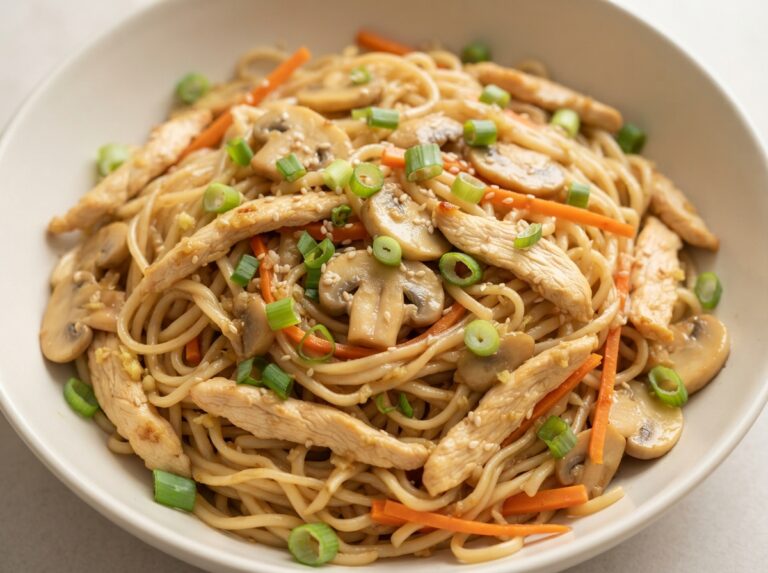
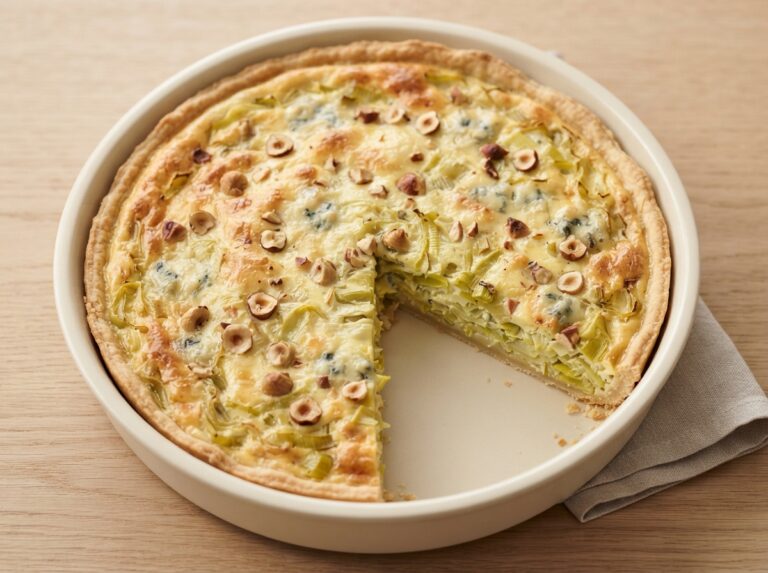
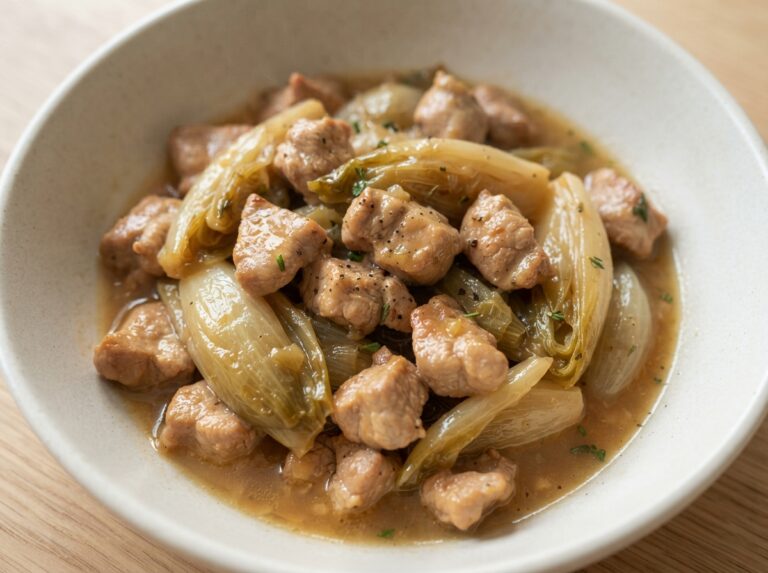
- En cuisine, un bon mijoté repose sur l’équilibre entre douceur, fondant et caractère. Cet émincé de porc mijoté aux champignons et sauce au cidre brut mise sur cette harmonie simple. Le résultat est chaleureux, précis, et très facile à aimer.Ce que j’apprécie dans cette recette, c’est sa lisibilité. On prépare tout vite, puis la sauteuse fait le reste en moins d’une heure. Le porc reste tendre, tandis que les champignons apportent une texture plus généreuse.Le cidre brut donne une acidité nette et discrète. Il allège la crème et réveille la sauce sans la rendre agressive. C’est ce contraste qui rend ce porc mijoté aux champignons si agréable à table.Vous pouvez l’adapter facilement selon vos placards. Ajoutez du thym, un peu de noix de muscade, ou davantage de persil plat. Une pointe de moutarde à l’ancienne renforce aussi la personnalité de la sauce.Cette recette plaît autant aux adultes qu’aux enfants, surtout avec une garniture simple. Elle convient très bien pour un repas du soir ou pour recevoir sans stress. Servez-la avec du riz, des pommes vapeur ou une poêlée de légumes.
- image_prompt
- **Émincé de porc mijoté aux champignons et sauce au cidre brut** served as the finished, plated main dish, ready to eat.
Final dish presentation:
– photographed from EXACTLY a 35-degree camera angle above the dish (fixed camera elevation for every image produced, never 15°, never 25°, never 40°, never top-down, never front-on)
– the dish is the finished plated meal, fully cooked and served, never a preparation scene
– extreme close-up macro product shot: the plate fills nearly the entire frame, with only a very thin margin around it
– centered horizontally in the frame, no side bias
– served in an opaque matte cream ceramic shallow serving bowl with solid, fully opaque walls — the contents are visible only from the top opening, never through the sides of the bowl
– no cutlery visible, no fork, no knife, no spoon anywhere in the frame
– no props of any kind, no napkin beside the bowl, no extra dishware
– bare neutral light wood surface barely visible at the edges, soft blurred background, no kitchen clutter
– the pork is the hero ingredient and must dominate visually, occupying about 55% of the visible food massFinished dish structure:
– the pork appears as tender, irregularly cut pale golden strips, lightly glazed by the sauce, clearly identifiable as pork lanières
– the mushrooms appear as sliced button mushrooms, browned at the edges, nestled through the sauce and visible throughout the dish
– the sauce is a smooth, glossy, pale beige cream sauce with a gentle sheen from the cider reduction and mustard
– the surface should look moist, creamy, and gently pooled, not dry, not stiff, not separated
– the dish is spoonable and rustic, with visible sauce clinging to the pork and mushroomsSTRICT INGREDIENT CONSISTENCY:
– 600 g filet de porc: the pork must appear as the main visible mass, sliced into tender thin strips, pale golden-brown at the edges, moist and succulent, never diced, never whole chops, never shredded
– 300 g champignons de paris: the mushrooms must appear as sliced off-white to light caramel mushroom pieces, soft and glossy, never whole caps, never black mushrooms
– 2 échalotes: the shallots must be very finely minced and softened into the sauce, visible only as tiny translucent pale bits, never as large chunks
– 2 gousses d'ail: the garlic must be melted into the sauce as tiny softened fragments, never raw, never browned aggressively
– 20 cl de cidre brut: the cider must read as a reduced glossy sauce element, slightly amber in tone, never as a separate drink or watery pool
– 20 cl de crème fraîche épaisse: the cream must create a velvety, thick, cohesive sauce coating the pork and mushrooms, never curdled
– 2 c. à soupe d'huile d'olive: the oil must appear only as a subtle cooking gloss, no visible oily puddles
– 20 g de beurre: the butter must contribute a rich sheen and slight gloss, not visible as a separate chunk
– 1 c. à soupe de moutarde à l'ancienne: the mustard must be integrated into the sauce, with only a gentle speckled grain visible, never as a separate topping
– 1 c. à soupe de persil plat: the parsley must appear as a fresh green final scatter on top, finely chopped and light
– 1 pincée de sel: no visible crystals, only implied seasoning
– poivre noir: tiny dark flecks dispersed in the sauce and on the pork, subtle and realisticColor palette:
– pale golden pork strips
– light caramel and beige mushroom slices
– creamy ivory and pale beige sauce
– warm amber notes from the cider reduction
– small fresh green parsley flecks
– subtle black pepper specksVisual realism:
– authentic homemade French braised appearance, natural sauce pooling, gentle gloss, irregular but appetizing distribution
– no duplicated ingredient patterns, no artificial symmetry, realistic depth in the bowl
– the dish must look freshly served, warm, and comfortingFood photography:
– ultra-realistic professional food photography, soft diffuse natural window-side lighting, gentle shadows, shallow depth of field, strong background blur, 85mm macro lens feel, highly detailed textures, 8K photorealistic quality, culinary magazine styleNo timing text, no descriptions overlay, no extra notes, no clutter, minimal shadows, no numbers, no digits, no badges, no watermark, no logo, no captions of any kind anywhere in the image.
- collage_prompt
- A vertical Pinterest-style food photography collage for **Émincé de porc mijoté aux champignons et sauce au cidre brut**, portrait orientation, 2:3 aspect ratio, EXACTLY 6 square photo panels arranged in a 2-column by 3-row grid (2×3, total 6, no more no less), same bowl and consistent lighting across all panels. This is a plain photographic grid, not an infographic, not a tutorial graphic, not a diagram — just six ordinary food photographs placed side by side. ABSOLUTELY NO TEXT ANYWHERE: no panel numbers, no digits, no badges, no circles, no ingredient name captions or labels under any bowl or item, no watermark, no words in any language. Pure photography only, zero typography of any kind.
Style:
– ultra-realistic food photography, bright natural lighting, clean modern French kitchen aesthetic, soft shadows and realistic textures, elegant Pinterest-style composition, premium food magazine look, soft warm neutral background, FIXED 35-DEGREE CAMERA ANGLE above the food for EVERY one of the 6 panels, never top-down, never flat lay, never front-on, exactly 35 degrees above the food for consistent framing
– the same opaque matte cream ceramic serving bowl must be used in every panel where the finished dish appears
– the same light wood surface must be used consistently across the collage
– no exotic props, no chopsticks, no foreign tableware, only simple French-appropriate utensils if neededPanneau en haut à gauche — ingredients:
– display the raw ingredients of this recipe in small separate bowls and on small plates
– include thin raw pork strips, sliced button mushrooms, minced shallots, peeled garlic cloves, a small glass of dry cider, a small bowl of thick cream, a small dish of mustard, a little pile of chopped parsley, a small dish of olive oil, a small piece of butter, and tiny bowls of salt and black pepper
– the pork should look pale pink and fresh, the mushrooms creamy white, the cider amber, the cream thick and white, the parsley bright green
– no labels, no text, no ingredients written anywherePanneau en haut à droite — cooking step:
– show the pork strips being seared in a hot sauteuse with visible browning on the edges
– the pan should contain only the cooking pork and fat sheen, no hands, no stirring spoon, no raw prep scene
– the pork must look lightly golden and just beginning to color, with a realistic cooking surface and gentle steam
– this panel must clearly show a real cooking stage, not a cutting or chopping scenePanneau du milieu à gauche — next cooking step:
– show the mushrooms and shallots being cooked in the same sauteuse after the pork has been removed
– the mushrooms must be visibly browned and softened, with the shallots translucent and glossy
– include the garlic integrated into the pan contents, with gentle steam and a light sheen from butter and olive oil
– this panel must look distinct from the first cooking panel, with a deeper caramelization and less rawnessPanneau du milieu à droite — sauce and reduction step:
– show the cider reduction being transformed into a sauce with cream and mustard in the sauteuse
– the sauce should look pale beige, glossy, and velvety, lightly bubbling around the edges
– the mushrooms should remain visible within the sauce, and the consistency should look thicker and more cohesive than the previous panel
– the pan must still be the same cooking vessel, with visible simmering but no hands or utensilsPanneau en bas à gauche — the finished dish in full:
– show the completed dish fully cooked and served in the same opaque matte cream ceramic shallow serving bowl
– the pork should be tender strips coated in sauce, the mushrooms evenly distributed, and the surface glossy and creamy
– the bowl must be centered, filling most of the frame, on the same light wood surface
– no cutlery visible, no spoon, no knife, no fork, no extra side dish
– the dish should look warm, rustic, and appetizing, with a gentle parsley scatter on top if visible from the recipe stepsPanneau en bas à droite — final close-up hero shot:
– extreme close-up macro of a single spoonable portion of the finished pork and mushroom dish, centered exactly in the frame
– the same opaque matte cream ceramic bowl must still be the serving vessel, with only a small area of the bowl visible
– the image must be much tighter than the previous panel, with the pork strips and sauce texture dominating the frame
– the pork strips should look moist, tender, and coated in glossy sauce, and the mushroom slices should be visible in sharp appetizing detail
– no lifting action, no hand, no spoon in motion, no serving gesture, just a stable plated portion resting inside the bowl
– bright natural daylight, clear background, highly appetizing and scroll-stopping, matching the same lighting and surface as the finished dish panelDifferentiation rules:
– each of the 6 panels must show a visually distinct moment
– do not repeat the same composition or stage in two adjacent panels
– keep the cooking progression logical: raw ingredients → seared pork → softened mushrooms and shallots → cider cream sauce reduction → finished dish → extreme close-up of the finished dish
– the finished-dish panels must match the same bowl, same surface, same lighting, and same recipe appearance as the featured image promptFood details:
– ingredients must look fresh and realistic
– cream and sauce must have rich, smooth texture
– mushrooms must look browned and soft, not raw
– pork must look tender and lightly caramelized, never dry
– parsley must be a small fresh green accent only if visible in the final dishQuality:
– ultra-detailed professional food photography
– clean Pinterest-viral aesthetic
– realistic 4K look
– coherent colors and lighting across all 6 panels
– no clutter, no typography, no icons, no decorative overlaysSTRICT REQUIREMENTS: portrait orientation, 2:3 aspect ratio, exactly 6 panels total, arranged in a 2×3 grid, absolutely no more and no less. ABSOLUTELY NO TEXT ANYWHERE IN THE IMAGE, of any kind: no panel numbers, no digits, no step counters, no numbered badges or circles, no ingredient names written as captions or labels under bowls/items, no watermark, no logo, no captions, no words in any language, no typography of any kind. This is a pure photograph — if you find yourself about to render any letter, word, or number anywhere in the frame, do not. Pure photography only, zero graphic overlays, zero text.
Conseils :
- Saisissez le porc par petites portions pour bien colorer la viande sans la sécher.
- Laissez les champignons rendre leur eau avant d’ajouter l’ail pour éviter une sauce diluée.
- Réduisez bien le cidre avant la crème pour obtenir une sauce plus nappante et plus parfumée.
- Ajoutez la moutarde à l’ancienne hors forte ébullition pour garder une sauce lisse et stable.
- Servez ce porc mijoté aux champignons avec du riz, des pommes vapeur ou des pâtes fraîches.
FAQs :
Peut-on préparer cet émincé de porc à l’avance ?
Oui, cette recette se prépare très bien quelques heures avant le service. Réchauffez doucement à feu doux avec une cuillère d’eau ou de crème si la sauce a épaissi.
Peut-on remplacer le cidre brut dans ce porc mijoté ?
Oui, vous pouvez utiliser un cidre doux, un bouillon léger ou un vin blanc sec. Le goût sera un peu différent, mais la sauce restera savoureuse.
Cette recette est-elle adaptée à un régime sans gluten ?
Oui, elle peut convenir à un régime sans gluten si la moutarde et la crème utilisées sont certifiées sans gluten. Vérifiez aussi le cidre si vous êtes très sensible aux traces.
Peut-on faire cette recette sans lactose ?
Oui, remplacez la crème fraîche par une crème végétale épaisse. La sauce sera un peu moins ronde, mais restera bien liée et agréable.
Combien de temps conserver l’émincé de porc aux champignons ?
Conservez-le jusqu’à trois jours au réfrigérateur dans une boîte hermétique. Réchauffez-le à feu doux pour préserver le moelleux du porc.
Peut-on servir ce plat froid ?
Ce plat est meilleur chaud ou tiède. Froid, la sauce devient plus ferme et les arômes du cidre sont moins expressifs.