Préparation :
- Faites cuire les coquillettes dans une grande casserole d’eau salée. Elles doivent rester juste al dente, car elles finiront au four. Égouttez-les, puis réservez-les sans les rincer pour garder un peu d’amidon.
- Pendant ce temps, coupez le jambon blanc en petits dés réguliers. Râpez le comté finement pour qu’il fonde plus facilement. Préparez aussi la chapelure et gardez-la à portée de main.
- Faites fondre le beurre dans une casserole, puis ajoutez la farine d’un coup. Mélangez vivement pour former un roux lisse et légèrement mousseux. Versez le lait petit à petit, en fouettant, jusqu’à obtenir une béchamel épaisse et sans grumeaux.
- Ajoutez la crème fraîche, la noix de muscade, le sel et le poivre. Incorporez ensuite la moitié du comté râpé dans la sauce chaude. La préparation doit devenir bien nappante et brillante.
- Ajoutez les coquillettes égouttées et les dés de jambon dans la béchamel. Mélangez soigneusement pour enrober chaque pâte. Versez le tout dans un plat à gratin beurré, puis lissez légèrement la surface.
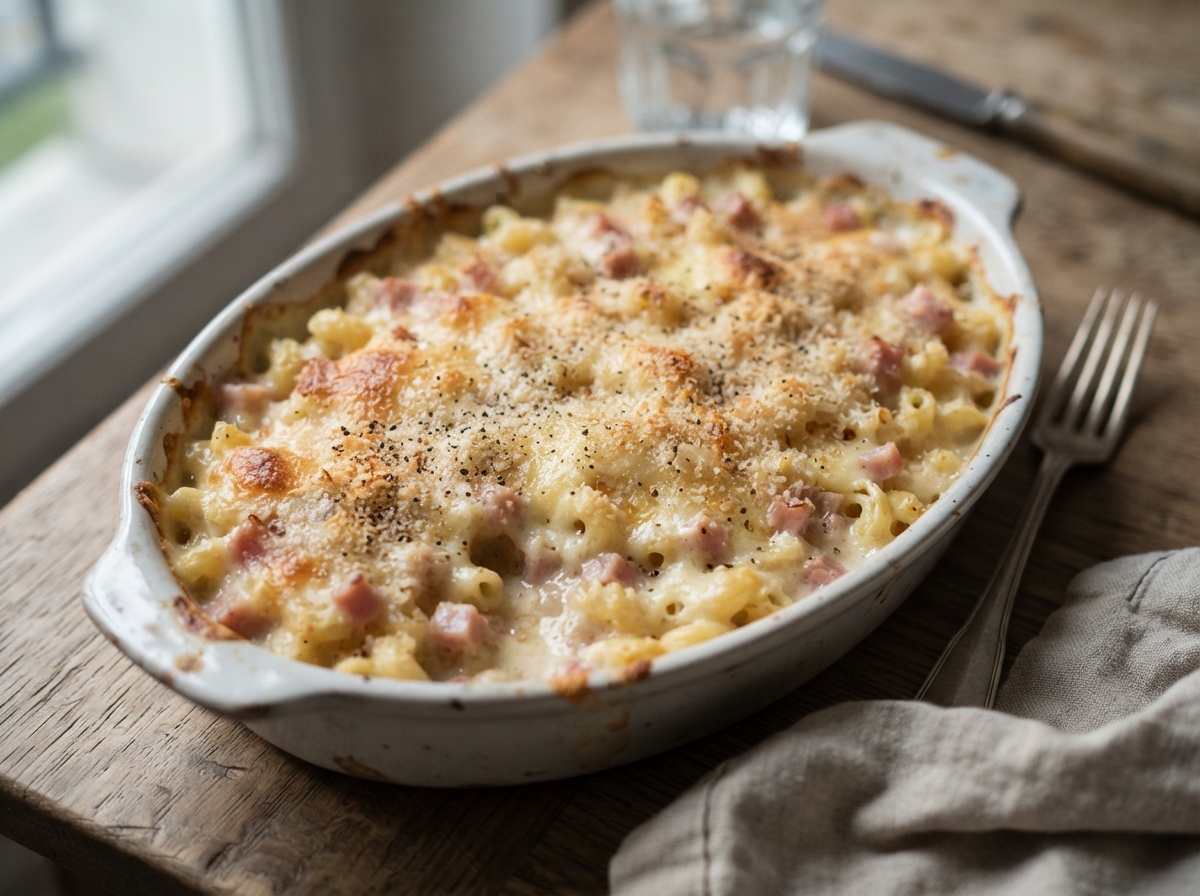
- Répartissez le reste du comté sur le dessus, puis ajoutez la chapelure en fine couche. Enfournez jusqu’à obtenir un dessus doré et légèrement gratiné, avec des bords qui frémissent.
- Laissez reposer quelques minutes avant de servir. Le gratin se tient mieux à la découpe et les saveurs se fondent davantage. Servez chaud, directement dans le plat.
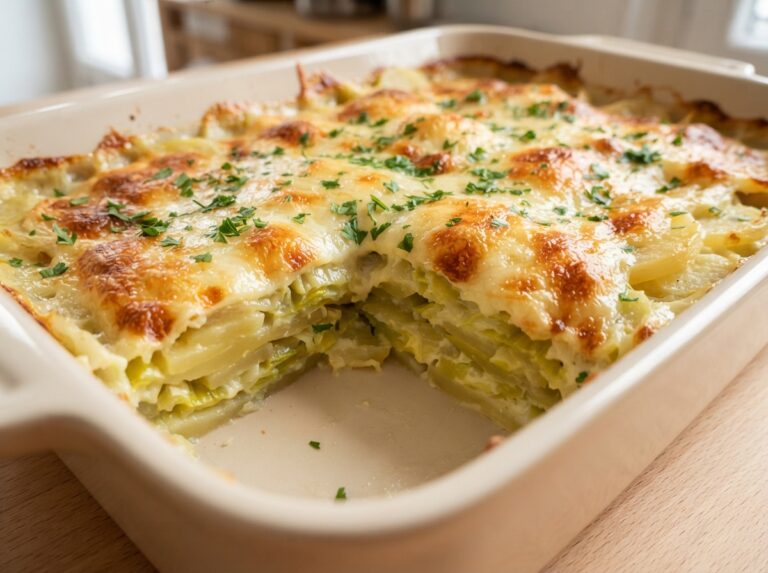
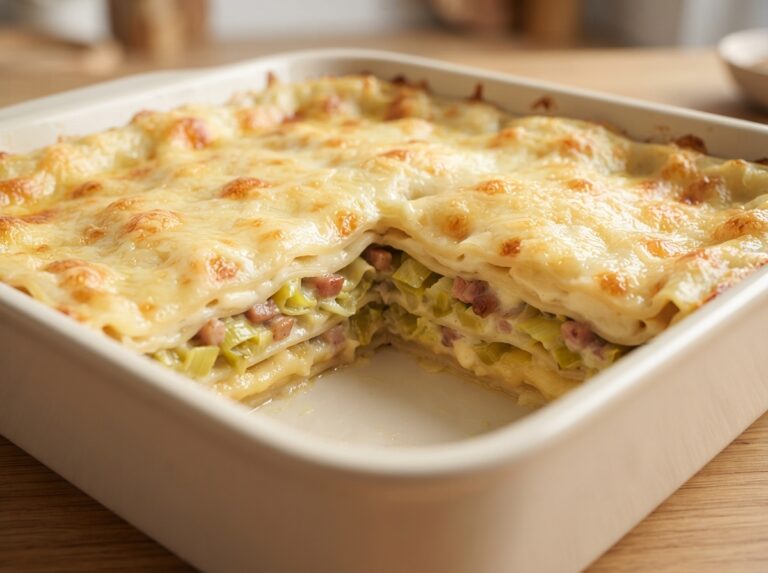
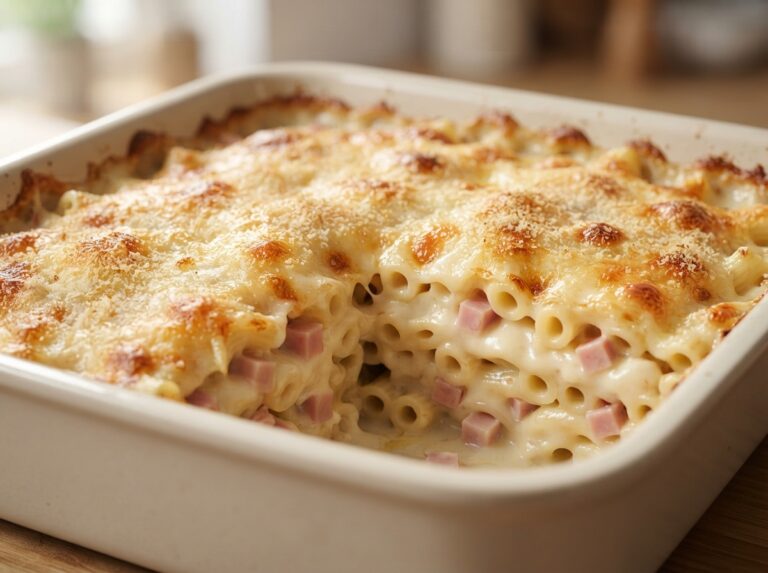
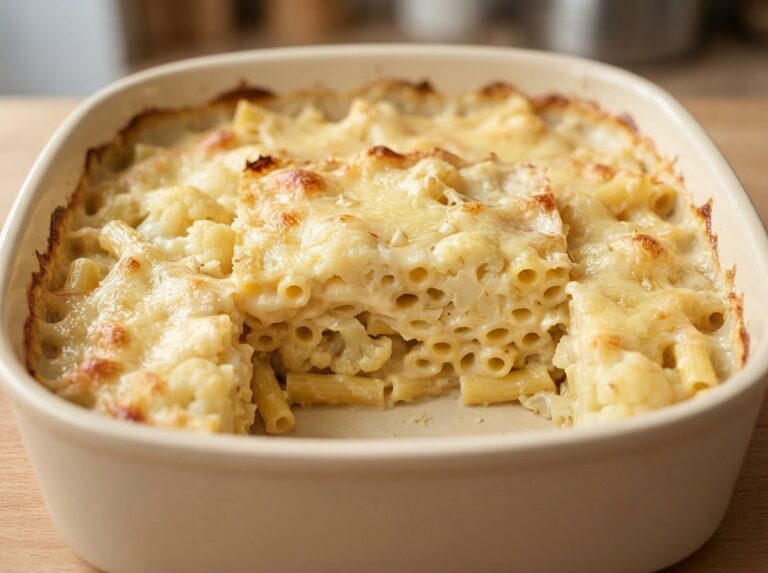
- En cuisine, il y a des plats qui rassurent dès la première bouchée. Le gratin de coquillettes au jambon et au comté en fait partie. Il réunit des saveurs simples, franches et très gourmandes. C’est un plat chaud, généreux, et toujours réconfortant.Ce que j’apprécie dans ce gratin coquillettes jambon, c’est sa simplicité. La recette reste accessible, même un soir de semaine. En moins d’une heure, vous obtenez un plat familial complet. Le résultat plaît immédiatement, grâce à sa texture fondante et dorée.Le contraste est particulièrement réussi entre la sauce crémeuse et le dessus gratiné. Le comté apporte une vraie profondeur, avec une note fruitée et salée. Le jambon donne du relief sans alourdir l’ensemble. Ce mariage fonctionne aussi bien pour un déjeuner rapide que pour un dîner convivial.Vous pouvez facilement adapter cette base selon vos envies. Ajoutez un peu de poivre, de thym, ou quelques herbes ciselées. Pour une version plus rustique, remplacez une partie du comté par un autre fromage affiné. Cette recette reste idéale pour une cuisine rapide, pratique et chaleureuse.Ce gratin plaît aux enfants comme aux adultes. Il s’invite sans difficulté dans les repas du quotidien, mais aussi quand vous recevez. Servez-le avec une salade verte croquante ou quelques crudités. Un peu de légumes vapeur complète aussi très bien ce plat complet.
- image_prompt
- A finished **gratin de coquillettes au jambon et au comté**, baked until golden and bubbling, served and ready to eat.
Final dish presentation:
– photographed from a 30-to-35-degree camera angle above the dish (sweet spot 35°), camera positioned slightly above the rim of the vessel and looking slightly downward. The FOOD SURFACE (garnish, sauce, pieces inside) faces the viewer as the main subject and occupies at least 55-65% of the vessel's visible height. The top rim forms a moderately flattened ellipse with a height-to-width ratio between 1/2.5 and 1/3.5 — NEITHER a very thin ellipse (which would be a near-side 15-25° view, forbidden) NOR a near-round circle (which would be a near-top-down 50-plus-degree view, forbidden). The outer side wall of the vessel is visible but takes no more than 30-40% of the vessel's visible height — a frame around the food surface, not the main subject. Food content shows real depth with front pieces partially hiding back pieces. A soft blurred kitchen background is visible behind the dish
– served in an opaque matte cream ceramic serving dish with solid, fully opaque walls — the contents are visible only from the top opening, never through the sides of the dish
– the whole gratin is centered in the frame with the baking dish fully visible, and one rectangular corner or spooned-out serving gap reveals the cross-section of the pasta mixture
– the vessel is a rectangular or oval ceramic gratin dish, not a transparent dish and not a metal baking tray
– the dish fills nearly the entire frame, with only a very small margin around it, and no props cluttering the scene
– no cutlery visible, no fork, no knife, no spoon, no pie server anywhere in the frame
– the visible serving gap exposes the baked interior, showing tender coquillettes, diced ham, creamy béchamel, and melted comté, all clearly baked together
– the surface is evenly golden with deeper browned patches on the cheese, and a few lightly crisped edges around the sides
– the comté is visibly melted and gratinéed, with a warm pale-golden top and subtle toasted spots
– the coquillettes remain recognizable as short curved pasta, not mashed or collapsed
– the ham appears as small diced pink pieces distributed through the creamy pasta, never as large slices
– the dish looks homemade, abundant, and rustic, with a natural baked surface and realistic bubbling at the edges
– framed as an extreme close-up macro product shot : the dish and its vessel fill nearly the entire frame (at most 3-8% margin on each side), touching the frame edges — no cutlery of any kind visible, no folded napkin beside the vessel, no props of any kind in the frame, no elaborate kitchen ambiance behind — just the dish, its vessel, and the bare surface it rests on cropped by the frame edges. Tight, high-impact, Pinterest-thumbnail composition designed to stop the scrollGratin cross-section:
– the cut corner reveals 2 to 3 clearly alternating strata of creamy pasta and melted cheese, with diced ham distributed throughout the filling
– the interior is not a smooth homogeneous mass; the pasta pieces remain distinct and layered within the creamy sauce
– the top layer is a gratinated blanket of melted comté, lightly browned and slightly crisp in places, clearly separate from the softer interior below
– the baked edges show slightly deeper color than the center, which remains creamy and moistSTRICT INGREDIENT CONSISTENCY:
– the coquillettes must appear as short curved pasta pieces, fully coated in sauce, never dry or straight
– the ham must appear as small diced pink cubes, evenly folded into the pasta, never as whole slices
– the comté must appear grated and melted on top, with some of it folded into the sauce, never as a solid block
– the béchamel must appear smooth, glossy, and creamy, never watery or lumpy
– the butter, flour, milk, cream, nutmeg, salt, pepper, and chapelure are represented through the baked texture and seasoning, not as separate visible ingredients
– never substitute ingredients, no ingredients outside the recipeSTRICT QUANTITY CONSISTENCY:
– the coquillettes are the hero ingredient and must occupy approximately 60% of the visible dish
– the ham must remain clearly present but secondary to the pasta
– the comté must be visible as a generous gratin topping, not a sparse sprinkle
– never reduce ingredient quantities for aesthetic reasonsCoquillettes texture:
– short curved pasta, tender but still holding shape
– pale golden-beige, glossy from the béchamel
– distinct individual pieces visible in the cut sectionJambon texture:
– small pink diced pieces, soft and moist
– evenly dispersed through the pasta, not dry or stringy
– slightly darker than the surrounding sauce for clear contrastComté texture:
– melted golden cheese on the surface, lightly blistered in places
– creamy and stringy in the cut section
– deeper toasted spots at the highest points of the gratinBéchamel texture:
– smooth, velvety, glossy, and thick
– pale ivory with a warm buttery tone
– clings to the pasta without pooling thinlyColor palette:
– golden-brown cheese crust
– pale ivory cream sauce
– soft pink ham cubes
– light beige pasta
– warm toasted edgesVisual realism:
– authentic homemade baked appearance, natural bubbling and melt pattern, no duplicated ingredient patterns, visible ingredient separation, realistic volume and depthFood photography:
– ultra-realistic professional food photography, soft diffuse natural window/side-lighting highlighting glossy and wet textures with gentle shadows for volume, shallow depth of field, strong background blur, 85mm macro lens feel, highly detailed textures, 8K photorealistic quality, razor-sharp focus on the food, culinary magazine styleNo timing text, no descriptions overlay, no extra notes, no clutter, minimal shadows, no numbers, no digits, no numbered badges or circles, no watermark, no logo, no captions of any kind anywhere in the image.
- collage_prompt
- A vertical Pinterest-style food photography collage for **gratin de coquillettes au jambon et au comté**, portrait orientation, 2:3 aspect ratio, EXACTLY 6 square photo panels arranged in a 2-column by 3-row grid (2×3, total 6, no more no less), same bowl/pan/plate and consistent lighting across all panels. This is a plain photographic grid, not an infographic, not a tutorial graphic, not a diagram — just six ordinary food photographs placed side by side. ABSOLUTELY NO TEXT ANYWHERE: no panel numbers, no digits, no badges, no circles, no ingredient name captions or labels under any bowl or item, no watermark, no words in any language. Pure photography only, zero typography of any kind.
Style:
– ultra-realistic food photography, bright natural lighting, clean modern kitchen aesthetic, soft shadows and realistic textures, elegant Pinterest-style composition, premium food magazine look, soft pastel or white background, FIXED 35-DEGREE CAMERA ANGLE above the food for EVERY one of the 6 panels (identical camera elevation across all 6 panels AND matching the same 35° angle used in image_prompt above — never top-down, never flat lay, never a three-quarter overhead view, never a low 10-15° near-eye-level view, exactly 35 degrees above the food for consistent framing), highly appetizing and realisticPanneau en haut à gauche — ingredients: small bowls and plates showing the real ingredients separately, with uncooked coquillettes in a white ceramic bowl, diced ham in a small pale dish, grated comté in a tiny bowl, a dish of butter, a small bowl of flour, a glass of milk, a small ramekin of cream, and tiny pinches of salt, pepper, nutmeg, and breadcrumbs visible in neat portions. No labels, no captions, no text anywhere.
Panneau en haut à droite — the coquillettes cooking stage: pasta boiling in a pot of salted water, steam visible, the pasta turning tender but still holding shape, no hands, no utensils as the main subject, no text.
Panneau du milieu à gauche — the sauce stage: a creamy béchamel being thickened in a saucepan, glossy and smooth, with melted comté incorporated into the sauce, the sauce appearing velvety and pale ivory, no raw ingredients on a board, no text.
Panneau du milieu à droite — the assembly stage: cooked coquillettes and diced jambon folded into the creamy béchamel in a large mixing bowl or directly in a gratin dish, the pasta fully coated and the ham clearly visible as small pink cubes, all ingredients distinct and realistic, no hands in frame.
Panneau en bas à gauche — the finished dish entier: a baked gratin de coquillettes au jambon et au comté served in an opaque matte cream ceramic serving dish with solid, fully opaque walls — the contents are visible only from the top opening, never through the sides of the dish. The whole gratin is centered in the frame with one rectangular serving gap or spooned-out corner revealing the cross-section of the pasta mixture. The surface is golden and bubbling with toasted comté, and the vessel is the exact same matte cream ceramic serving dish and the same light neutral surface as in the final image prompt. No cutlery visible, no fork, no knife, no spoon, no pie server anywhere in the frame.
Panneau en bas à droite — extreme close-up macro shot of ONE single plated serving from the gratin, resting stably on the same kind of opaque matte cream ceramic serving dish or directly on the visible surface beside it. The serving fills almost the entire frame, centered dead center, with the baked pasta, melted comté, and diced ham in sharp focus and a soft blurred background. The angle must match the final dish style, and the image must feel like a tighter crop from the same shoot. The portion must look stable and physically realistic, with no floating food and no cutlery or hands.DIFFÉRENCIATION VISUELLE OBLIGATOIRE ENTRE LES 6 PANNEAUX:
– the first panel is raw ingredients in separate containers
– the second panel is boiling pasta in action
– the third panel is sauce thickening and becoming creamy
– the fourth panel is pasta and ham being folded into the sauce
– the fifth panel is the full baked gratin in its ceramic dish
– the sixth panel is an extreme close-up of one single serving with the molten cheese and pasta texture clearly visible
– each panel must show a clearly different stage, never two panels that look like the same momentApply the same visual rules as the main image: realistic ingredient textures, no invented toppings, no extra garnish, no text, no props outside the recipe, and the exact same opaque matte cream ceramic serving dish and the exact same light surface for the final two panels. Keep the composition clean, bright, and appetizing, with natural homemade French comfort-food styling. The final panel must be the most eye-catching and the most tightly cropped, designed to stop the scroll.
STRICT REQUIREMENTS: portrait orientation, 2:3 aspect ratio, exactly 6 panels total, arranged in a 2×3 grid, absolutely no more and no less. ABSOLUTELY NO TEXT ANYWHERE IN THE IMAGE, of any kind: no panel numbers, no digits, no step counters, no numbered badges or circles, no ingredient names written as captions or labels under bowls/items, no watermark, no logo, no captions, no words in any language, no typography of any kind. This is a pure photograph — if you find yourself about to render any letter, word, or number anywhere in the frame, do not. Pure photography only, zero graphic overlays, zero text.
Conseils :
- Faites cuire les coquillettes une minute de moins pour garder une texture ferme après le passage au four.
- Râpez le comté très finement afin qu’il fonde vite dans la béchamel et nappe mieux les pâtes.
- Beurrez généreusement le plat à gratin pour éviter que les coquillettes n’attachent sur les bords.
- Ajoutez le jambon seulement hors du feu pour préserver son moelleux et son goût délicat.
- Laissez reposer le gratin cinq minutes avant de servir pour obtenir une découpe plus nette.
FAQs :
Peut-on préparer ce gratin coquillettes jambon à l’avance ?
Oui, vous pouvez le monter quelques heures avant cuisson. Gardez-le au réfrigérateur, puis enfournez au dernier moment. Ajoutez simplement quelques minutes de cuisson si le plat sort du froid.
Comment remplacer le comté dans ce gratin de pâtes gratinées ?
Vous pouvez utiliser de l’emmental, du beaufort ou un mélange de fromages râpés. Choisissez un fromage qui fond bien et qui a du goût. Évitez les fromages trop humides, qui détendent la sauce.
Peut-on faire cette recette sans gluten ?
Oui, remplacez les coquillettes classiques par des pâtes sans gluten. Utilisez aussi une farine sans gluten pour la béchamel. La texture reste agréable si vous gardez une sauce bien épaisse.
Existe-t-il une version sans lactose pour ce plat familial ?
Oui, remplacez le lait, la crème et le beurre par des versions sans lactose. Choisissez aussi un fromage affiné adapté, si besoin. Le résultat sera un peu différent, mais toujours crémeux.
Comment conserver ce gratin de coquillettes au jambon ?
Laissez-le refroidir, puis placez-le dans une boîte hermétique au réfrigérateur. Il se conserve deux à trois jours. Réchauffez-le au four pour retrouver une surface gratinée.
Peut-on servir ce gratin froid ?
Oui, mais il est bien meilleur chaud ou tiède. Froid, il se tient davantage et la sauce paraît plus ferme. Servez-le ainsi seulement pour un pique-nique ou un buffet.